Woodber - Classic Number Game
LIHUHU PTE. LTD.Board
4.95.97K Reviews
- Version
- 2.19.1
- Installs
- 10.00M
- Age Rating
- Everyone
Screenshots
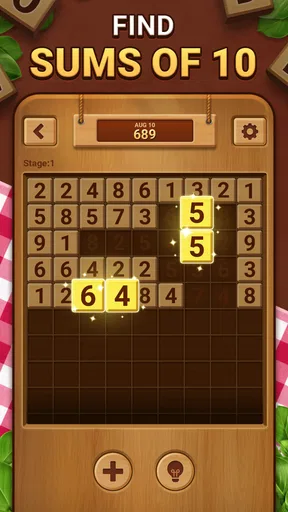
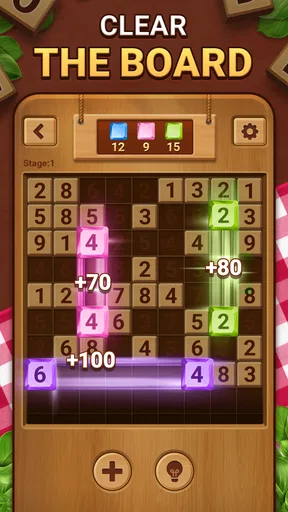


Our Review of Woodber - Classic Number Game
 Analysis by Appyee
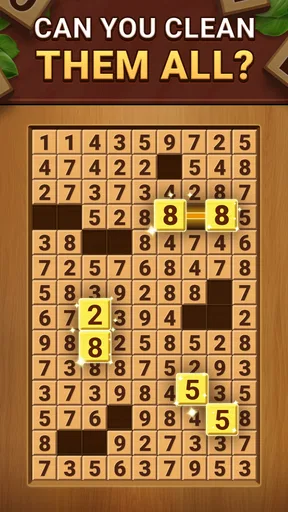
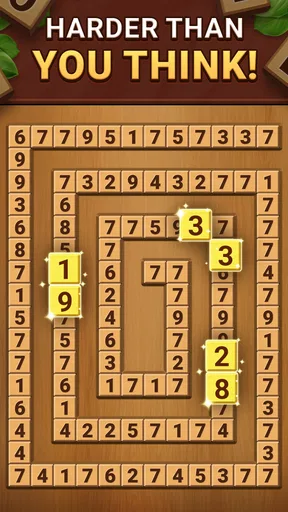
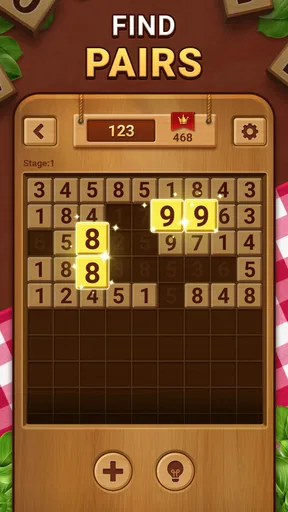
I went into Woodber - Classic Number Game expecting a simple board-game time killer, but I found something more deliberate: a number puzzle that asks me to slow down, scan the board, and make decisions before moving anything. Its basic appeal is easy to understand. I match logic-based numbers on a wooden-looking board, clear combinations, and try to keep my thinking organized rather than tapping randomly.
That simplicity is also where the game can be misleading. The first few rounds feel immediately accessible, yet later boards reward patience more than speed. A move that looks useful can remove the only convenient partner for another number, leaving the board awkwardly blocked. I enjoy that tension, especially when I play for a few minutes while waiting somewhere, but it also means the game is not ideal for anyone looking for a completely mindless distraction.
Woodber is a free board game from LIHUHU PTE. LTD. It is rated for Everyone, works on Android seven and newer, and its current version is 2.19.1. The game has attracted over ten million installs, with a 4.9 average from around 397 thousand ratings and roughly 6 thousand written reviews. Those figures suggest a large and broadly satisfied audience, although I still think the right question is whether its particular pace suits you.
What playing Woodber is really like
I find the appeal of Woodber lies in how a familiar number-matching board turns a spare moment into a small exercise in planning. In this section, I’ll focus on the rhythm of play and the choices that make a move feel worthwhile, then consider what that experience means for its free entry point and optional purchases.
The opening is easy, but the board soon demands planning
The central activity is matching numbers across the board. At first, I could identify useful pairs almost immediately, so the game felt relaxed and welcoming. The challenge grew when several possible matches appeared at once. Instead of asking only, “What can I clear now?”, I had to consider which move would leave the most useful choices afterward.
That small change in thinking is the best part of the design. The game does not need complicated rules to create meaningful decisions. A quick match may open space, but a different match may preserve a better route through the remaining numbers. I started checking the edges and isolated-looking areas before committing to the obvious pair. That habit made my play more consistent than simply working from the first match I noticed.
The wooden presentation fits the board-game identity without making the experience feel like a traditional tabletop simulation. It gives the screen a calmer character than a bright arcade puzzle. I can imagine using it in short sessions because the visual language is quiet and the rules are simple enough to resume without relearning anything.
Where players are most likely to get stuck
The first common sticking point is not understanding the rules; it is choosing a poor order of moves. When the board offers several legal matches, clearing one immediately can make the next stage harder. I learned to pause for a quick scan before tapping. I look for numbers that have fewer possible partners, then deal with those before consuming flexible matches that could help in several places.
A second problem is treating every available move as equally valuable. It is not. A match that clears a crowded section can be more useful than one that merely removes two easy tiles. When I am close to running out of options, I prioritize moves that improve visibility and preserve future choices. This is a practical difference between playing reactively and actually solving the board.
The game can also feel less forgiving when I am tired or rushing. Because the rules are familiar, I sometimes assume I am playing automatically, then discover that I overlooked a useful combination. For that reason, I prefer short, attentive sessions. If I am distracted, the game feels more frustrating than relaxing, even though the controls themselves are straightforward.
Small setup checks before blaming the game
Since Woodber is free to install and aimed at a general audience, getting started should be uncomplicated. My advice is to begin with the basics: use a supported Android device, allow the initial launch to finish, and make sure the app has enough room to operate normally. Android seven or newer is the stated minimum, so an older phone is not a good starting point.
If the game opens slowly, freezes, or fails to respond, I first close other demanding apps and reopen Woodber. I also check whether the device itself is low on free storage or running unusually hot. Those checks are simple, but they matter because board puzzles depend on reliable touch input. A delayed tap can look like a missed match when the real issue is the phone struggling in the background.
I would also avoid repeatedly tapping while the screen is busy. When an action appears delayed, waiting a moment is safer than sending several extra inputs. Rapid tapping can make it harder to tell whether the game registered the original move. This is especially useful for younger players or anyone using an older device, where touch response may not feel as immediate as it does on a newer phone.
Another sensible check is to restart the app after an update or after a long period of background use. The current release is 2.19.1, and normal app maintenance can occasionally leave a session behaving oddly until it is relaunched. I would not jump straight to reinstalling, though. Restarting the app and the phone is less disruptive and gives me a clearer idea of whether the problem is temporary.
Recovering a session without losing the thread
When I return to a puzzle after being interrupted, I do not immediately continue tapping. I spend a few seconds reconstructing the board: which area was I clearing, which numbers had limited partners, and which move was I considering next? That brief reset prevents me from making a careless move simply because I forgot the plan I had before switching away.
If a board suddenly feels impossible, I retrace the last few decisions mentally. Usually, the issue is not that the game has changed its rules; I have used a useful match too early or failed to notice a better sequence. Treating the board like a small logic problem helps. I look for the point where options narrowed, then change my approach on the next attempt instead of repeating the same order.
My most useful recovery habit is to stop chasing speed. The game may look like something to clear as quickly as possible, but rushing removes the main advantage I have: time to inspect the available choices. I make one deliberate move, reassess the remaining board, and continue. This is more reliable than trying to remember a long chain of actions.
There is also a practical difference between a difficult puzzle and a broken session. If the board still responds to taps and the layout changes as expected, I treat the challenge as part of the game. If controls stop responding entirely, I close and reopen the app before doing anything more drastic. That simple distinction keeps me from confusing normal puzzle difficulty with a technical fault.
When the app may not be the cause
Not every interruption comes from Woodber. A phone with aggressive battery management can pause background apps, while a crowded device can make any game feel sluggish. Weak connectivity may also affect parts of the experience that depend on loading, even though the core activity is a self-contained number puzzle from my point of view. I check the phone’s general behavior before deciding that this particular game is at fault.
Touchscreen problems are another easy source of confusion. If taps are being missed in other apps, cleaning the screen and removing anything that interferes with touch response is more useful than changing puzzle settings. I also avoid playing with wet fingers or while the phone is under pressure in a pocket or bag. A board game exposes inconsistent touch input quickly because every selection matters.
Notifications can interrupt concentration even when the game itself is working correctly. I prefer to silence unnecessary alerts during a puzzle, particularly when I am trying to plan several moves ahead. This is not a special feature of the game; it is simply a better environment for a task that depends on visual attention.
Finally, I keep expectations realistic about purchases. The game is free, but it includes in-app items priced from $1.99 to $9.99 each. I would approach those options carefully and use device purchase controls if children may play on the phone. The free entry point is a genuine advantage, but the presence of optional spending means it is worth deciding in advance whether I want to play without buying anything.
How it compares with familiar alternatives
Compared with a classic crossword, Woodber is less dependent on vocabulary and more focused on visual sequencing. I do not need a broad knowledge base to begin, which makes it easier to share with family members who prefer numbers. Compared with a traditional Sudoku app, it feels more immediate because I am matching and clearing rather than filling a fixed grid according to several row, column, and region rules.
It also differs from fast block-puzzle games. Those usually emphasize fitting shapes efficiently and reacting to a changing board. Woodber gives me more time to inspect number relationships, so the pressure comes from decision quality rather than rapid placement. That makes it a better fit for a calm break, but a weaker choice if I want quick reflexes, energetic effects, or competitive action.
On the other hand, players who enjoy deep strategic board games may find it too lightweight. The rules are approachable by design, and the satisfaction comes from finding a clean sequence rather than managing a large system of resources or long-term character development. I would choose a more complex puzzle game when I want a campaign, a strong narrative, or a multiplayer experience.
Who will get the most from it
I think Woodber works especially well for people who like number puzzles but do not want the formal structure of Sudoku. It is also a good option for a short mental break because the premise is clear and the board can be understood at a glance. Parents may appreciate the Everyone rating, although I would still supervise purchases and make sure the child understands that fast tapping is not the goal.
A realistic use case for me is a ten-minute wait before an appointment. I can open the game, inspect a board, and play at my own pace without needing to remember a complicated story or coordinate with another person. If I am interrupted, I can return to the same visual problem and rebuild my plan. That makes it more convenient than a game that requires a continuous session.
It is less suitable for someone who wants guaranteed relaxation with no chance of frustration. The game is simple to learn, but a poor sequence can make a board feel stubborn. I would also skip it if I mainly want online competition, rich customization, or a large social layer. Its appeal is the focused puzzle itself, not a broad collection of game systems.
My practical verdict
After spending time with it, I see Woodber as a polished, approachable board puzzle that earns its simplicity. The strongest reason to try it is the way ordinary number matching becomes a lesson in order and foresight. I can play casually, but the game rewards me when I slow down and protect future options.
The main friction is mental rather than technical: the relaxed appearance can tempt me to play carelessly, and then the board punishes an impulsive sequence. Basic troubleshooting is also worth remembering. Restart the app when input becomes unreliable, check the phone before blaming the game, and avoid rapid repeated taps when a move seems delayed.
LIHUHU PTE. LTD. has made a free game that is easy to approach without making every decision meaningless. The large audience and strong average rating match my overall impression, but I would still recommend it selectively. If you enjoy calm number puzzles, short solo sessions, and the satisfaction of finding a better order of moves, this is an easy one to try. If you need action, multiplayer competition, or a fully effortless distraction, another type of board game will probably suit you better.
My recommendation is simple: install it for the thoughtful, low-pressure matching rather than expecting an endless stream of novelty. Give the board a proper scan, protect the numbers with fewer options, and treat each move as part of a sequence. That is where the game becomes more than a quick tap-to-clear pastime.
Verdict
Strengths of Woodber - Classic Number Game
- Simple number puzzles are easy to learn and suitable for quick sessions.
- Clean wooden design gives the game a calm, pleasant visual style.
- Gradually harder levels provide a steady challenge for puzzle fans.
- Offline play makes it convenient for travel or areas without internet.
- Helpful hints can assist when you get stuck on a difficult board.
Limitations of Woodber - Classic Number Game
- Some levels may feel repetitive after extended play sessions.
- Hints and extra features may be limited without watching advertisements.
- Frequent ads can interrupt gameplay, especially between completed puzzles.
- The difficulty curve may become frustrating for players seeking more variety.
- Limited social and competitive features reduce long-term replay value.
Other Releases by LIHUHU PTE. LTD.
View All
Mahjong Triple 3D - Tile Match
Board4.8

Triple Find - Match Triple 3D
Board4.8

Tiles in Hole: Black Hole
Casual4.8

3 Dots - Connect em all
Board4.5
Similar Picks in This Category
View All
Ludo King®
Gametion4.1

Ludo
Yarsa Games4.6

Tile Master® - Matching Game
Higgs Studio3.6

Checkers Online
CC Games4.6

Dominoes
Loop Games4.7

Chess
Chess Prince4.6
Frequently Asked Questions
What is Woodber - Classic Number Game?
Woodber - Classic Number Game is a relaxing number puzzle that combines classic pair-matching mechanics with a wooden board-style design. The main objective is to find and remove matching numbers or number combinations from the playing field. As you progress, the puzzles become more challenging, requiring observation, planning, and careful use of the available moves.
How do you play Woodber - Classic Number Game?
Gameplay is based on identifying numbers that can be paired according to the rules shown in the current puzzle. Depending on the level, matching numbers may need to be adjacent or connected through an available path. Players tap the valid pairs to clear them from the board, while using hints, rearrangements, or other tools when the remaining layout becomes difficult.
Is Woodber - Classic Number Game suitable for beginners?
Yes, Woodber is generally easy to understand for beginners because its core controls are simple and the early stages introduce the matching rules gradually. However, later puzzles require more strategic thinking, since removing an obvious pair too quickly can leave an awkward board. It is suitable for both casual players and fans of traditional number puzzles.
Does Woodber - Classic Number Game require an internet connection?
Many parts of Woodber can typically be played offline after the game has been installed, which makes it convenient for travel, commuting, or short breaks without reliable internet access. Some features may still require a connection, including advertisements, cloud-related services, updates, rewards, or certain promotional content. Availability can vary by device and app version.
Is Woodber - Classic Number Game free to download and does it contain ads?
Woodber - Classic Number Game is commonly available as a free download, allowing users to try its main puzzles without paying upfront. Like many free mobile games, it may include advertising and optional in-app purchases for hints, boosters, ad removal, or other conveniences. Before downloading, check the store listing for the current pricing, permissions, and purchase details.
Play our best games!


